
HGZ Self-Aligning Welding Rotators 10–100 t
CONTACT US
Contact: Jan Xu
Tel: +86 510 83559158
Email: jan@weldc.com
Review confirmed WUXI ABK HGZ-10, HGZ-50 and HGZ-100 self-aligning welding rotator capacities, diameter ranges, surface speed, RFQ inputs and FAT checks.
Technical Parameters
Equipment & Package
Certification & Inspection Documents
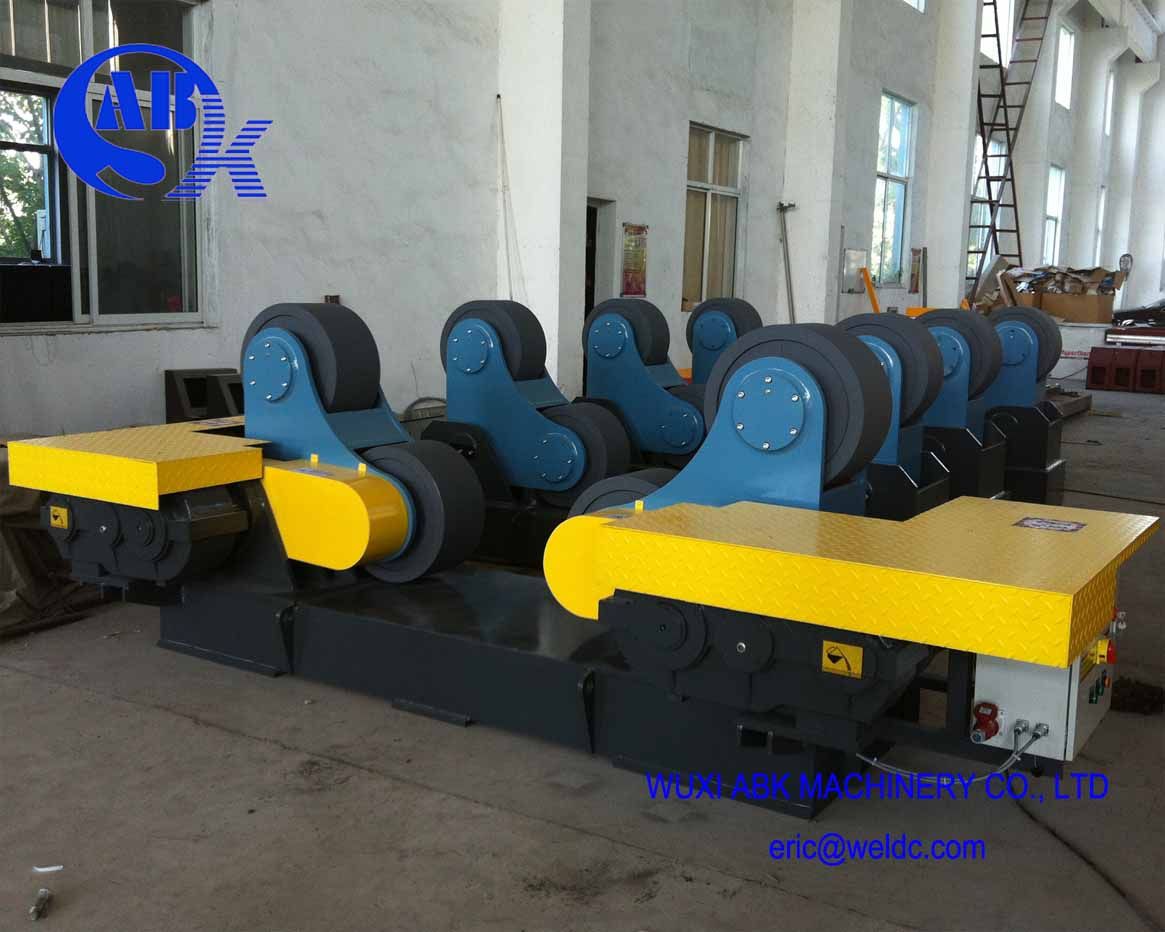
HGZ Self-Aligning Welding Rotators — Standard Series
Direct answer
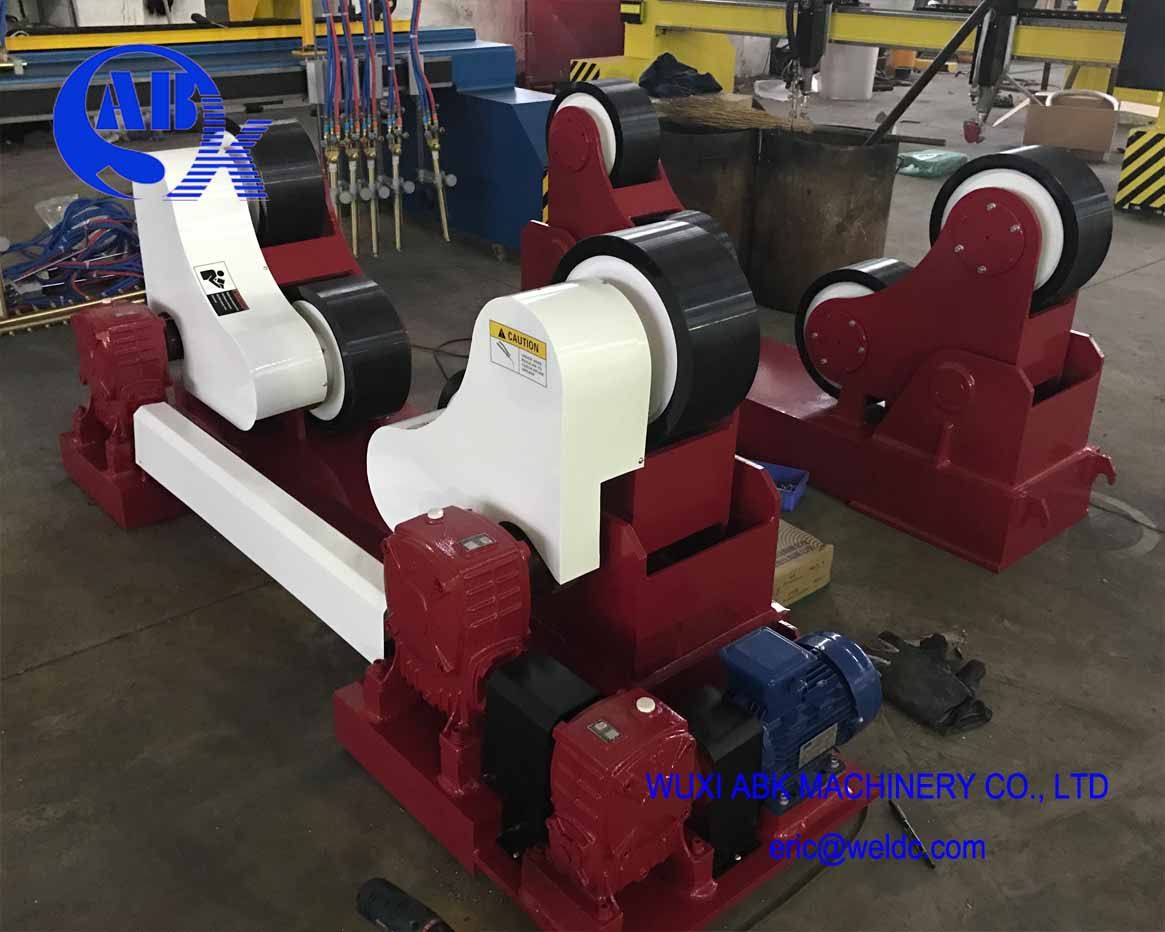
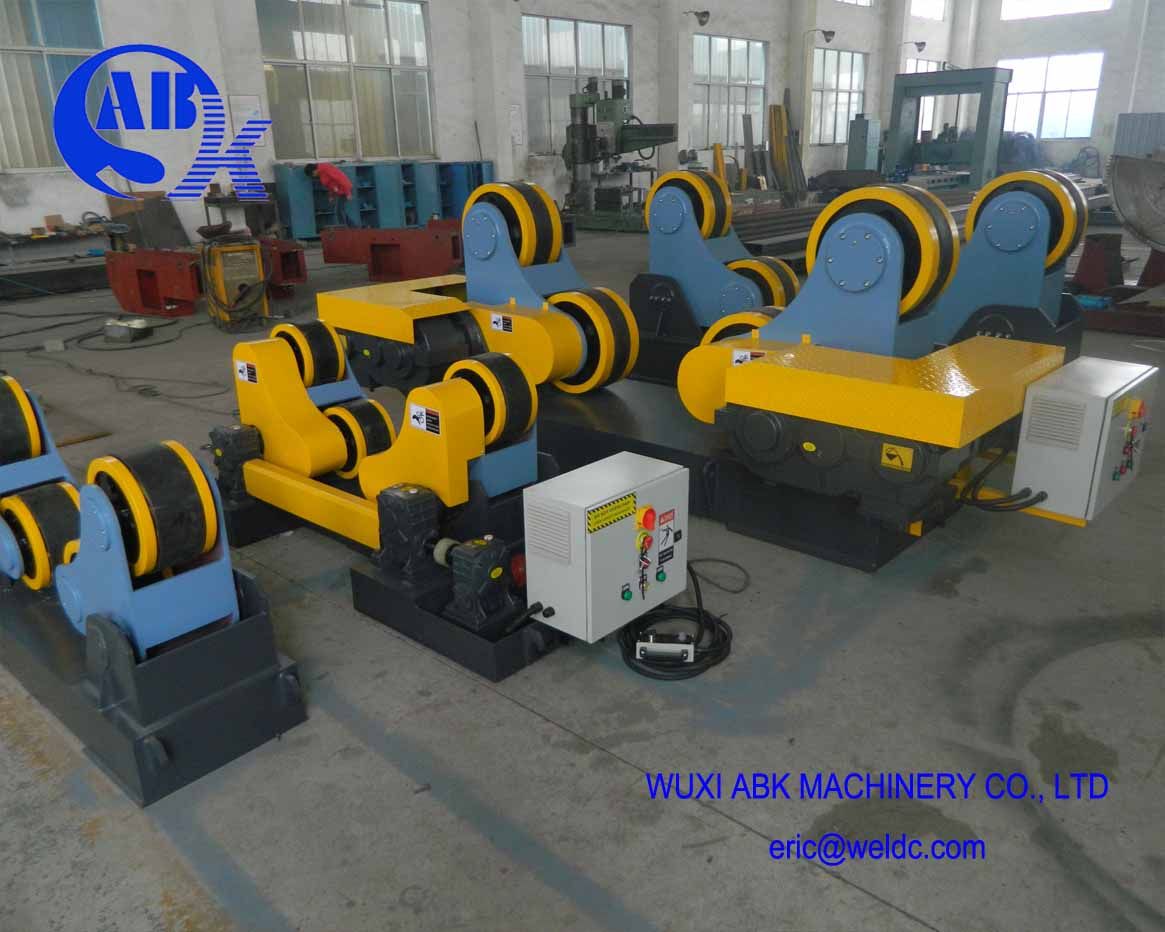
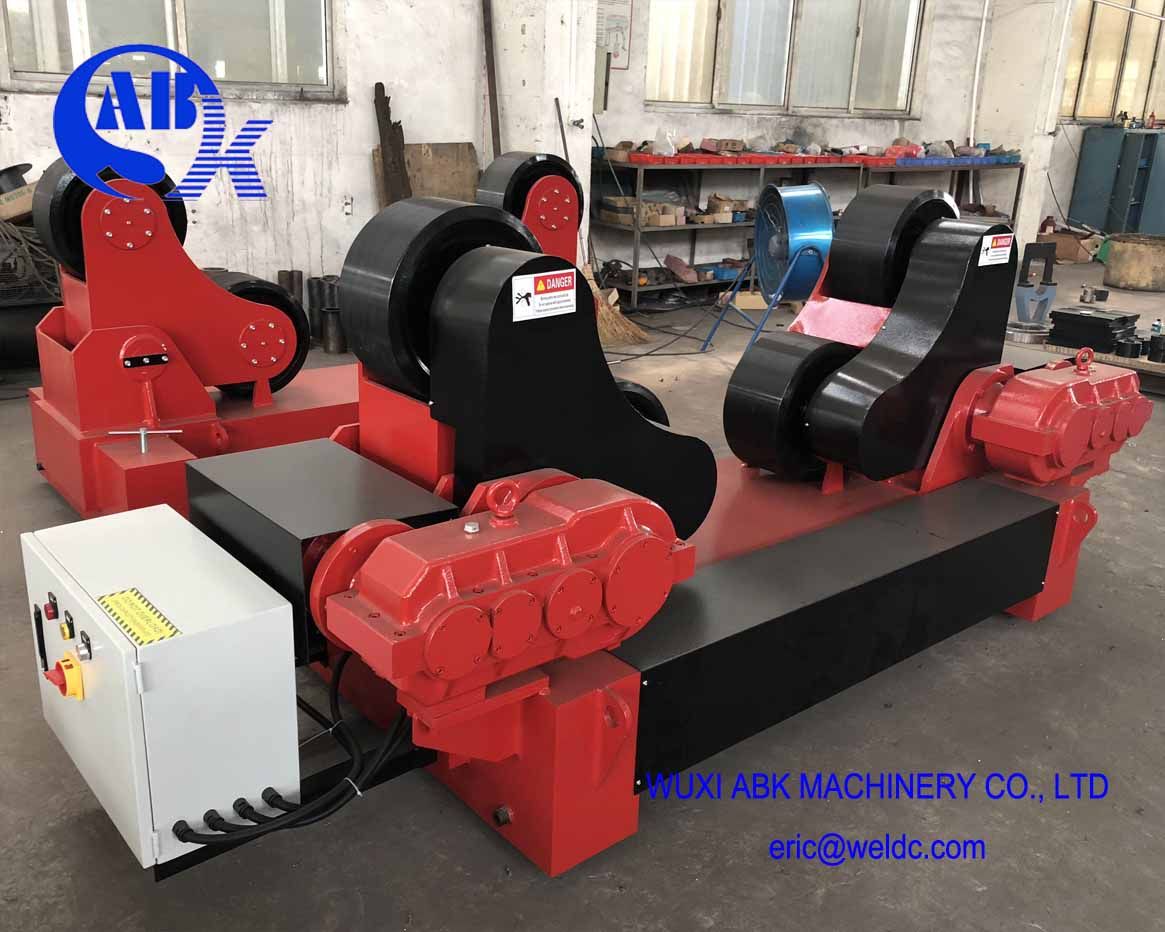
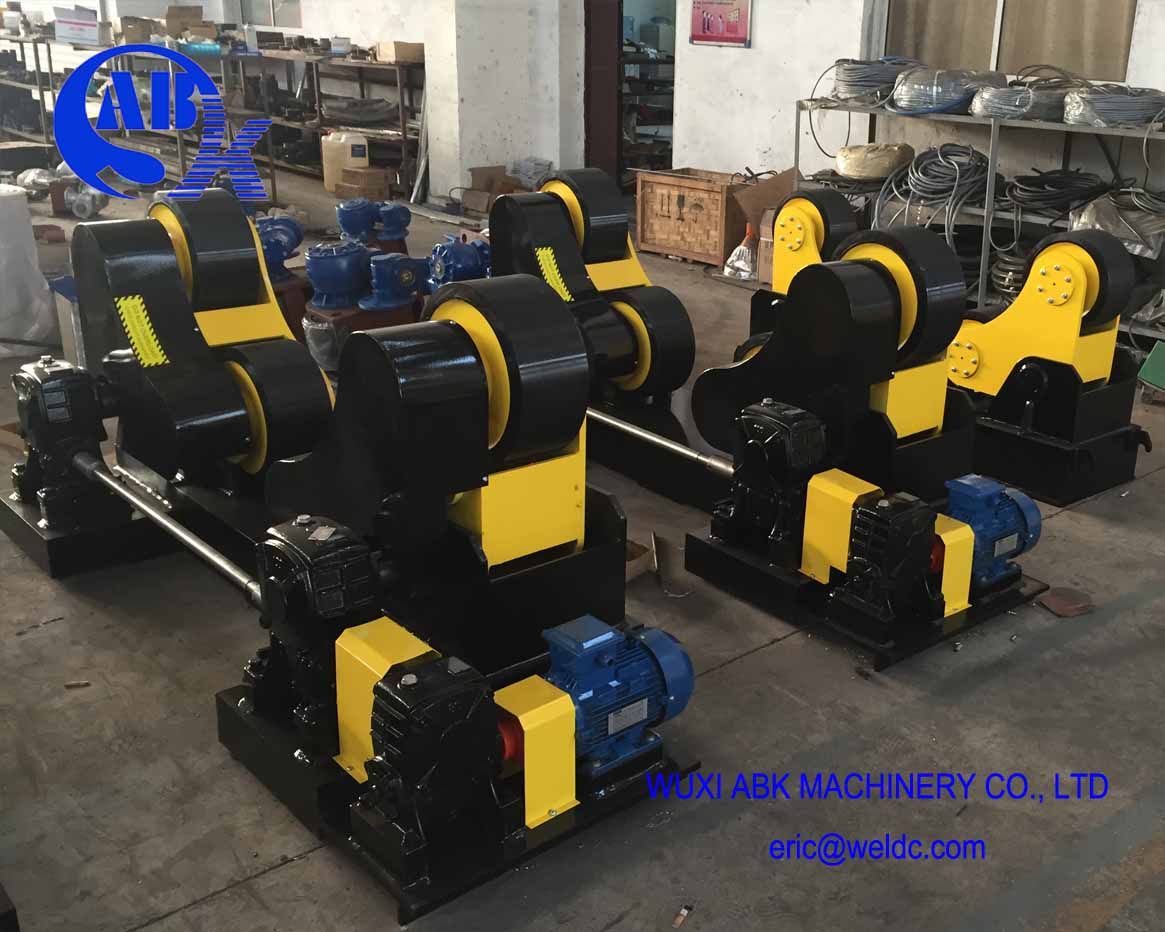
The WUXI ABK HGZ Standard Series is a self-aligning welding-rotator range for cylindrical workpieces used in pressure-vessel, pipe, tank and other fabrication applications. Confirmed reference models cover 10, 50 and 100 t rated capacities, with a surface-speed range of 100–1,000 mm/min. Final configuration remains subject to the approved order specification.
Confirmed reference specifications
HGZ-10: 10 t rated capacity; 100–1,000 mm/min surface speed; 400–3,500 mm workpiece diameter.
HGZ-50: 50 t rated capacity; 100–1,000 mm/min surface speed; 800–5,000 mm workpiece diameter.
HGZ-100: 100 t rated capacity; 100–1,000 mm/min surface speed; 1,000–6,000 mm workpiece diameter.
Rated capacity refers to one standard set comprising one drive unit and one idler unit under an evenly distributed concentric load. Eccentric loading, individual-unit support load, tractive capacity, extra idlers and safety margin must be defined in the signed technical specification.
What “self-aligning” and “Standard Series” mean
“Self-aligning” describes the roller arrangement used to accommodate an approved diameter range without manually resetting roller spacing for every diameter. “Standard Series” is WUXI ABK’s HGZ product-family name; it does not mean that every project receives an identical motor, control, wheel material or optional function. The order drawing and technical agreement define the supplied configuration.
When HGZ is the appropriate choice
HGZ is suitable when a workshop rotates cylindrical shells or vessels across a defined diameter range and wants faster diameter changeover than a manually adjustable arrangement. Typical applications include circumferential welding, cladding, assembly, inspection and controlled rotation during fabrication. Selection still depends on the complete workpiece condition rather than application name alone.
Do not select by tonnage alone
Use the maximum complete rotating weight, including flanges, nozzles, internals, temporary fixtures and other attachments. Also confirm workpiece length, support-point spacing, centre-of-gravity offset, shell stiffness and surface condition. These factors affect load sharing, wheel contact and rotational stability even when the nominal weight is below the published capacity.
Seven inputs required for an engineering proposal
1. Maximum complete rotating weight.
2. Minimum and maximum workpiece diameter.
3. Workpiece length and planned support-point spacing.
4. Centre-of-gravity offset, eccentric attachments and temporary fixtures.
5. Required surface speed, welding process and production target.
6. Workpiece material, surface condition and preferred wheel material.
7. Required controls, anti-drift functions, inspection and documentation.
What the quotation should define
• Drive and idler quantity and the exact load-rating definition.
• Approved workpiece diameter range and self-aligning arrangement.
• Motor, reducer, speed-control and remote-control arrangement.
• Wheel material and workpiece-contact requirements.
• Supplier scope, buyer-supplied interfaces and site utilities.
• FAT method, acceptance criteria and required records.
• Documentation, installation, commissioning and warranty scope.
Recommended FAT checks
• Verify model, approved drawing and nameplate information.
• Record no-load operation and the agreed load-test condition.
• Verify rotation direction, surface-speed control and emergency stop.
• Check the self-aligning movement across the agreed diameter range.
• Inspect wheel contact, workpiece stability and agreed interlocks.
• Review electrical drawings, manuals and order-specific certificates.
• Record deviations, corrective actions and final acceptance.
Certification and inspection boundary
WUXI ABK operates an ISO 9001 quality management system. CE applicability, third-party inspection and the document package are equipment- and order-specific. They must be confirmed in the quotation and signed technical agreement; ISO 9001 should not be interpreted as a product certification for every rotator.
Frequently asked questions
Does the published capacity refer to one roller stand?
No. It refers to one standard set comprising one drive unit and one idler unit under an evenly distributed concentric load.
Are PLC, hydraulic lifting and anti-drift included as standard?
Not automatically. These functions are project-specific unless listed in the signed order specification.
What is the difference between HGZ and HGK?
HGZ uses a self-aligning arrangement for an approved diameter range. HGK is the adjustable family, selected when the project requires the roller spacing to be set for different workpiece diameters. The correct choice depends on workpiece range, changeover needs, load condition and line integration.
Can WUXI ABK review a configuration outside these reference models?
Project-specific configurations can be reviewed after the load, diameter, centre-of-gravity, support arrangement, welding process and FAT requirements are supplied.
Request an engineering review
Send the maximum workpiece weight, diameter range, length, centre-of-gravity information and welding process to WUXI ABK.
Technical content reviewed by WUXI ABK Technical Team. Review date: 24 July 2026.
CONTACT US
- Email: jan@weldc.com
- Tel: +86 510 83559158
- Mobile: +86 15852538958
- Address: 20#, Yangnan Road, Yangshi, Luoshe Town, Wuxi, Jiangsu, China
Copyright © Boxmedia WUXI ABK MACHINERY CO., LTD